

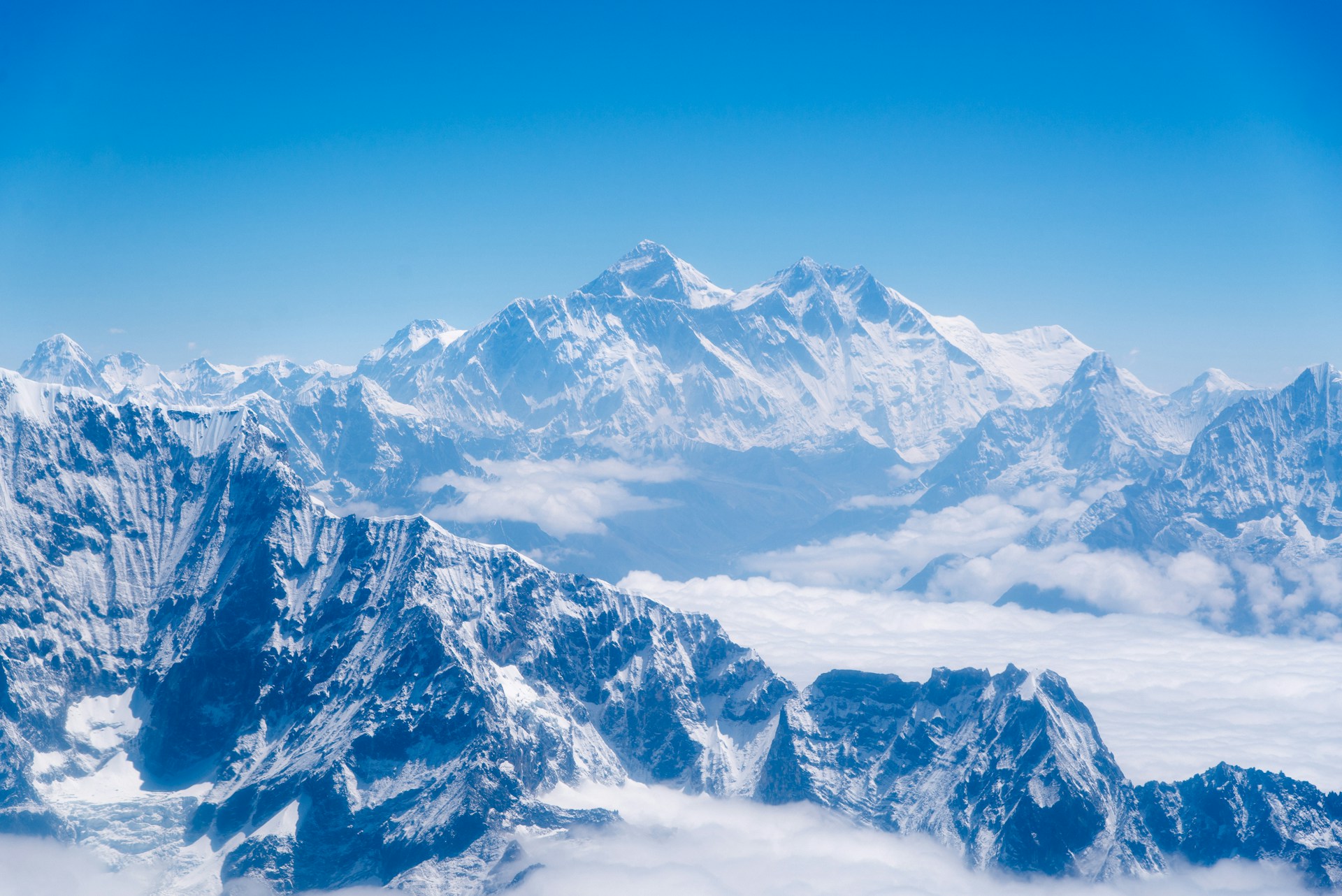
Mount Everest is already the highest mountain on Earth, but it is not staying exactly the same height. Scientists have found that the mountain is still slowly rising, with GPS measurements suggesting uplift of around 2 millimeters per year.
That may sound tiny, but over thousands of years, it can add up. The reason comes from the powerful geological forces beneath the Himalayas.
The Earth Is Pushing Everest Up
The main reason Everest continues to rise is tectonic movement.
The Indian tectonic plate is still pushing northward into the Eurasian plate. These two enormous pieces of Earth’s crust have been colliding for millions of years, creating the Himalayas.
The pressure does not simply stop after forming the mountains. The plates are still moving, so the Earth’s crust in this region continues to deform and rise.
This is why the Himalayas are sometimes described as a young and active mountain range. Everest is not a finished structure. It is still being shaped by the movement of Earth’s crust.
Rivers Are Also Playing a Role
There is another surprising part of the story.
A 2024 study published in Nature Geoscience suggested that the Arun River, which flows near Everest, may be helping the mountain rise.
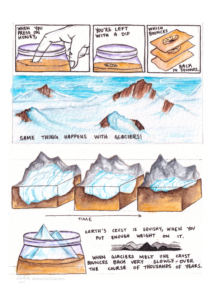
The river has been cutting deeply into the Himalayan landscape and carrying rock and sediment away. When enormous amounts of material are removed from the Earth’s surface, the crust underneath can slowly move upward.
Scientists call this process isostatic rebound.
It is similar to what happens when you remove a heavy object from something that is floating. Once the weight disappears, the object can rise slightly.
According to the study, an ancient change in the Arun River system around 89,000 years ago increased erosion in the region. The researchers estimated that this process could have contributed roughly 15 to 50 meters to Everest’s elevation over that enormous period of time.
Everest Is Fighting Erosion
There is an interesting contradiction here.
While tectonic forces and crustal rebound push Everest upward, erosion is constantly wearing the mountain down.
Rain, snow, glaciers, wind, and rivers all remove rock from the Himalayas. If erosion removed material faster than the land rose, Everest could become lower.
But in the Everest region, geological uplift currently appears to be greater than the amount of material being lost through erosion. That allows the mountain to slowly gain elevation.
Scientists Are Still Debating It
The river explanation is not completely settled.
In 2026, researchers published a study questioning whether the Arun River actually captured a huge area of drainage about 89,000 years ago, as the 2024 study proposed. They argued that differences in rainfall could explain some of the river’s unusual characteristics instead.
So scientists agree that the Everest region is still rising, but they are still investigating exactly how much the river contributes to that rise.
So Is Everest Getting Taller?
Yes, Everest is still rising, but extremely slowly.
The biggest reason is the continuing collision between the Indian and Eurasian tectonic plates. River erosion and the resulting rebound of Earth’s crust may provide an additional boost.
At roughly a few millimeters per year, nobody will notice Everest getting taller during their lifetime. But over thousands or millions of years, these tiny movements can dramatically change the landscape.
That means Mount Everest is not a frozen monument. It is a mountain that is still growing, even while the forces of erosion are constantly trying to tear it down.
References
Han, X. et al. “Recent uplift of Chomolungma enhanced by river drainage piracy.” Nature Geoscience, 2024. Click Here
Leonard, J. S. & Whipple, K. X. “Himalayan rivers reflect rainfall patterns, not river piracy.” Nature Geoscience, 2026. Click Here
